Afghanistan/9-11-01

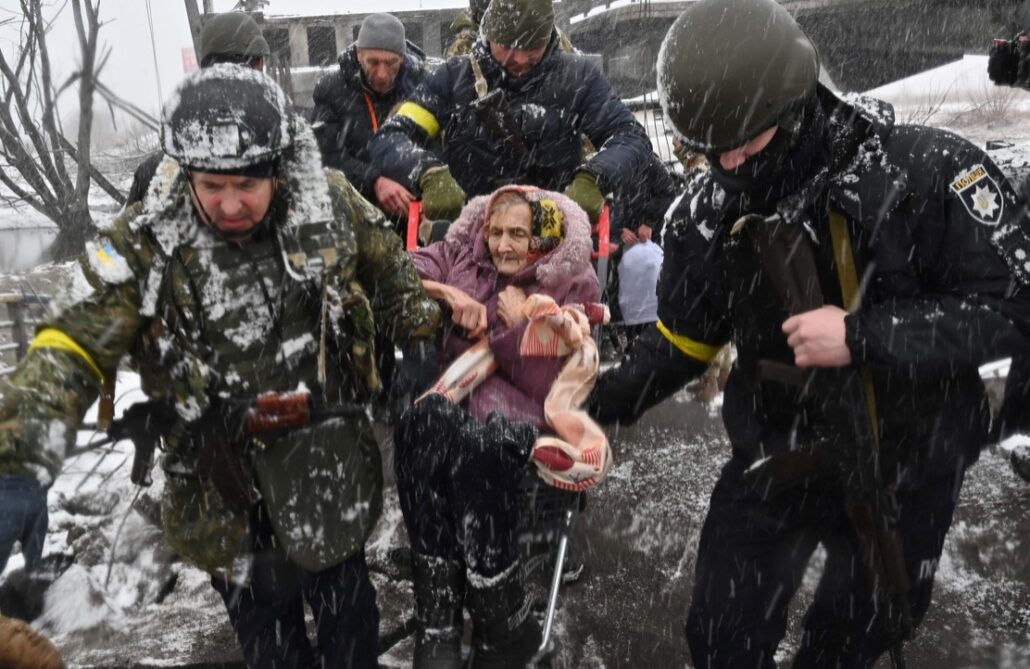
Today’s Minneapolis Star Tribune front page, above the fold, says it all:

Afghanistan is no stranger to this blog.  Three times so far in 2021 I’ve made mention, most recently in “The Zip to Zap” post on August 14 (see especially comments from John, Joyce and Sue, and my responses at that post).

The other recent posts are April 7, 2021, and July 7, 2021, which include a link to the CIA Factbook, not yet updated to the recent events, but still useful.  I’d encourage you to at least take a look at the relevant parts of these posts.

Ironically, one of the other posts shares attention with the country of Haiti, now beset with another tragedy – the recent earthquake.  Unfortunately, it is too hard to imagine these other places and their people are irrelevant to our daily life.  Not so….

I have many comments.  To suffice, for now, will be the other referenced posts, and the below:

Here’s the pdf of the above article that got me “off the couch” and into activism: Afghanistan Bombing Oct 10 2001.  (The bombing actually began on Sunday October 7; October 8 was Monday).  Responding to violence with more violence didn’t make any sense to me then, nor does it now.  But, as a society, we almost unanimously approved retribution and it was an exploitable emotion and here we are, 20 years later.  WE are the problem, and the solution…whatever that turns out to be.  Always.

Of course, there is endless chatter about whose fault this disaster is:  all fingers point at someone else.

This is a policy matter at the level of the U.S. government, which has a legislative branch, House of Representatives and Senate, who have the ultimate responsibility for the U.S. policy on everything.  And, of course, we the people elect these folks.

Some time back for my own enlightenment I made a chart of which party was in charge, when.  I have published it before.  Here it is again: U.S. Government001.  The tally does not include the 117th (current) Congress of 2021.  President Biden has been in office for 7 months.  The current House is Democrat 223-213; the Senate is 50 Republicans, 48 Democrats and 2 Independents who caucus with the Democrats.

If you qualify or will qualify to vote, YOU are the GOVERNMENT.  Period.  All the rest is editorial.

Back to you….

COMMENTS (see also end of this post):

from Joyce: I wish you could have met my late husband, also Dick. He died in early 2003 and he spent his last months cursing GWB for launching two unnecessary (and destined to be disastrous) wars. He was an army veteran (JAG, like my son) who had also opposed the war in Vietnam.

from Brian: Dick, thanks for sharing.  President  Biden is totally correct in getting us out of Afghanistan.   He had the conviction and courage to do it.

from Len: Does it really make a difference “who is to blame”? The ugliness of a protracted war  is about to be history for us and the hardened will rationalize this as “it is what it is”. From one perspective it is success for the Taliban and failed policy for the West. I hated it when I heard of our casualties each time they were reported over the 20 years, and I hate it and am d saddened when I observe the events of the day . I like peace and despise war. I thank and recognize those who  those who worked toward a peaceful place there. it seems we are incapable to change the place.Security for evacuation is a tall order. Thank you to those now  in harms way attempting to make that possible. Let us give credit and cease the blaming. Let us work toward the possibilities.

from Chuck: “If there is a sin superior to every other it is that of willful and offensive war. Most other sins are circumscribed within narrow limits, that is, the power of <b>one</b> man cannot give them a very general extension, and many kind of sins have only a mental existence from which no infection arises; but he who is the author of a war, lets loose the whole contagion of Hell, and opens a vein that bleeds a nation to death”.  – Thomas Paine The American Crisis.  [March 21, 1778].  Things haven’t changed.

The Zip to Zap

My take on today’s news below (see August 14)…but first a diversion…a piece of nostalgia.

On the recent trip to ND (recounted here), I bought a book on small town post offices which included a history of the post office in North Dakota by Kevin Carvell, who was long-time staff for U.S. Senator from N Dakota, Byron Dorgen.  The 7-page history (NDakota Postal History 3) was very interesting, and I sent it on to some folks, including my brother, John, who I thought might remember Kevin, which led to the following e-mail from John this morning, passed along with John’s permission.  The time period and place (Zap ND) we’re talking about is Spring Break 1970.  More about John at the very end of this post.  I do plan to do one or two more articles relating to North Dakota in the near future.  Watch for them.  (For regular readers, I’ve added to my August 8 post on North Dakota if you’re interested.)

John Bernard, August 13, 2021: Thanks for the very interesting article.

“Yes – I remember Kevin Carvell well. I met him a couple of times; and even though we were on rival staff at rival universities [University of North Dakota (UND) and North Dakota State University (NDSU)] we still got together at a couple of different conferences.

I’m sure you know the backstory of the Zip to Zap [google for much more] – it actually started because Kevin mused in the student newspaper at NDSU that he was going to have a staff picnic, and he figured a good place to hold it would be in Zap, North Dakota – primarily because [of] the name. The student newspaper wire service picked it up, and the rest is history. He was always just a little bit embarrassed by that.

Since I was sort of on assignments for the UND Dakota Student [photographer for the newspaper], I made it out to Zap about a half a day before the majority of the hordes of out of state students came in – and I can already see the problem. There were already massive beer trucks backed up to the two bars of the town, and a couple of other temporary bars. As you well know, as the night wore on things got quite a bit more drunk and rowdy. And I was snapping pictures throughout the entire thing. My most memorable shots came the next morning as the North Dakota National Guard came in and basically drove the students out of town – it was actually the day before the actual party was supposed to happen.

Unfortunately among the people being driven out of town [was] my ride back to Grand Forks – so I did about four or five separate hitchhiking legs and managed to make it back to Fargo, checked at the Spectrum (NDSU student paper) using my Kevin Carvell card. [I] Somehow found out that Life magazine was looking for some pictures of the event. Called them, and they arranged a courier to pick up my negatives. I actually used the Spectrum student dark room to process the negatives, sent them off, and if it weren’t for the Cambodian invasion that same weekend, they were going to be featured that week in Life.”

Dick: So…my brothers brush with fame was pole-axed by War….  He says he still has the photo negatives somewhere.  I said, don’t throw them out…maybe he’ll look more actively for them in the detritus of life out in California where he’s lived for many years…stay tuned, and more about John at the end of the post.

August 14, 2021:

Most every hour of every day, these days, is “breaking news”.  Today’s blog, which could have posted most any day this week, started out with three components:

  1.  Andrew Cuomo:  I said all I need to say in the Postnote to the Elders post of August 3. It is at the end of the post, here.  I suppose a personal key word for me would be “hypocrisy”, about all of us.
  2. Afghanistan:  The reason I became an activist after 9-11-01 was the bombing of Afghanistan.  I could see no good coming out of this stupidity.  That was 20 years ago.  I wrote a column published in the Minneapolis Star Tribune about this in the spring of 2002. Afghanistan colum 4:2002001.  As I’ve noted before, this column did not even mention or even allude to Iraq….In this latest chapter on the insanity of war as a solution, and the problems of quitting an unwinnable war, I keep thinking about the 2007 movie, Charlie Wilson’s War, about an early incursion into Afghanistan in the Reagan years.  At minimum, read any article about the movie.  Wilson was a Congressman at the time of the adventure.  I’m sure the movie is still available on-line.  NPR had a very interesting 2007 review here.
  3. Climate:  “CODE RED FOR HUMANITY” dominated the front page and almost the entire back page of the A section of my local paper on August 10.  The entire UN Report is here.

I recommend Just Above Sunset and Letters from an American as very good ongoing sources of information about national and international issues.

More items were added to my list as the week went on.  Let’s leave the list at that.

John Bernard, at right, Editor of the Dacotah, University of North Dakota, Grand Forks 1970. John graduated from UND in 1970, thence 20 years as an Air Force officer as navigator on the big transports, including some interesting times into Vietnam.

COMMENTS:

from Jane: My father was a postmaster.  I worked my way through college in the post office — sorting mail and selling stamps.

from John: As suggested once or twice, you might enjoy reading the Book of Revelation.  The subjective story helps one to think more abstractly.

The decision to withdraw troops sounded good a few months ago.  Today, not so much.  The net effects in the world as we have known it might be that the USA has been taken down a peg.

response from Dick: Thanks.  Call it what one will, “magical thinking” “amnesia”…we Americans have long believed that we are above the rest of the pack.  We rally round the flag when we go to war; war is destructive; we manage to get out of the mess we got ourselves into; then the next generation rallies around the flag, again. So far, we’ve had the bigger “toys”, but we forget that conventional war – the good old days of big guns and nukes – is old hat.  Non-conventional is the problem now…relational in most cases.

In this case, we shouldn’t have gone into Afghanistan in the first place – the powers that be knew the history.  We did start the bombing in 2001, and the American people thought that was a great idea.  Now, of course, Biden will be thanked…and blamed…for getting out and anyone with a microphone will be presenting their pristine and perfect case, for whatever side they happen to be on.  He made his declaration to leave very early on, probably even in his campaign last year.

I feel sorry for the rank-and-file Afghanis especially.  They are the victims.  As for us, we were ill-advised to go in in the first place, but wars represent money to be made, as well as political points.  Just watch the tenor of the chattering class in coming weeks.

from Joyce:  Your column on the war in Afghanistan really brought back memories. I was part of an online discussion group at the time, one which had its origins in the Clinton impeachment. I argued that the war was a colossal mistake, that it would turn into a quagmire, and that the effective response to 9/11 would be a police action seeking out Osama bin Laden, and the other perpetrators. That, of course, is exactly what got bin Laden, and the war in Afghanistan dragged on, with no real objective, and no real end game. I was, of course, vilified for my comments in that forum, told that I was unpatriotic, that I hated America. In the lead-up to the war, I started stapling anti-war posters to my back fence, which were torn down and left in shreds on the lawn within a few hours. I kept making new signs each day, and each day I would find my sign shredded. That, of course, involved people coming onto my property to tear up my signs.

The war in Afghanistan never had a purpose; after 20 years, and countless deaths, Afghanistan is back where the war started. The war on Iraq was another disaster; again, I protested, again, I was vilified, again my signs were shredded. I did note that, soon after the war on Iraq turned south, the PNAC [Project for New American Century] website was taken down; I found that very telling. Cheney and Rumsfeld were proteges of Eric’s late stepfather; Eric and I often wondered what he thought of them, and what he thought of the wars. Andy never talked about politics, so, we never knew what he thought.  Almost every high level official in the W. Bush administration was a signatory to PNAC. I believe that Cheney, having been given the job of picking a VP candidate to run with W., realized how ill informed and easily influenced W was, and saw it as a golden opportunity to put the PNAC plan into place.
*
from a great and long-time friend on the Climate Issue: It is so sad that the so-called scientists that contributed to the IPPC report don’t understand what is driving our climate change.  It would be nice to have the opportunity to educate them and help them see the big picture, but that is not likely happen.
*
Dick in response: I’ve never disagreed with my friends informed analysis about climate in the longer term, but there is a very definite difference in our view points.  My friend, a scientist though not in the climate area, points to the inevitability of massive change in earths climate – a new ice age, etc.  But he talks in terms of natural change, over tens of thousands or perhaps millions of years, for such natural processes to occur, as they have and they will.  My point, and I think the point of the scientists of IPPC (who are not “so-called”) is that we humans are aggravating a very real problem and the consequences for us are in the short term, and we’re facilitating them, and they’re now out of our control.  Humans cannot adapt that quickly; the rest of the plant and animal environment is even more vulnerable.  It still is possible for humans to change their environment (i.e. air conditioning).  Plants do not have the adaptation capacity to rapidly and permanently adjust to lower moisture, or higher temperature, nor do animals.
Years ago another friend, Melvin, gave me a novel, apparently self-published, written by someone in a nearby suburb.  It’s title was “Losers” by Chuck Waible.  It was about a small Minnesota town during bad times of climate change.  I read it, and I found it to be very interesting, then I misplaced the book.  I found it again on Amazon, and I would recommend it to anyone.  It gives much food for thought.  Check it out.  Yes, it’s a novel, but it will cause you to think.
Related and possibly even worse problems are depletion of ground water resources, which took aeons to develop and don’t have centuries to survive at the present rate of usage.  And things like depletion of things like accessible fossil fuels, and release of methane in places like the melting of the tundra.  Things like these are imminent threats which we tend to ignore as being somebody else’s problem, but it is the immediate succeeding generations will not have such a casual view, since they will be living in tense times.   Be aware.
*
from Sue, apparently related to Afghanistan: I am here to ask a question.  Were you in the military?  Army perhaps?  I the answer is YES I will send another email.
*
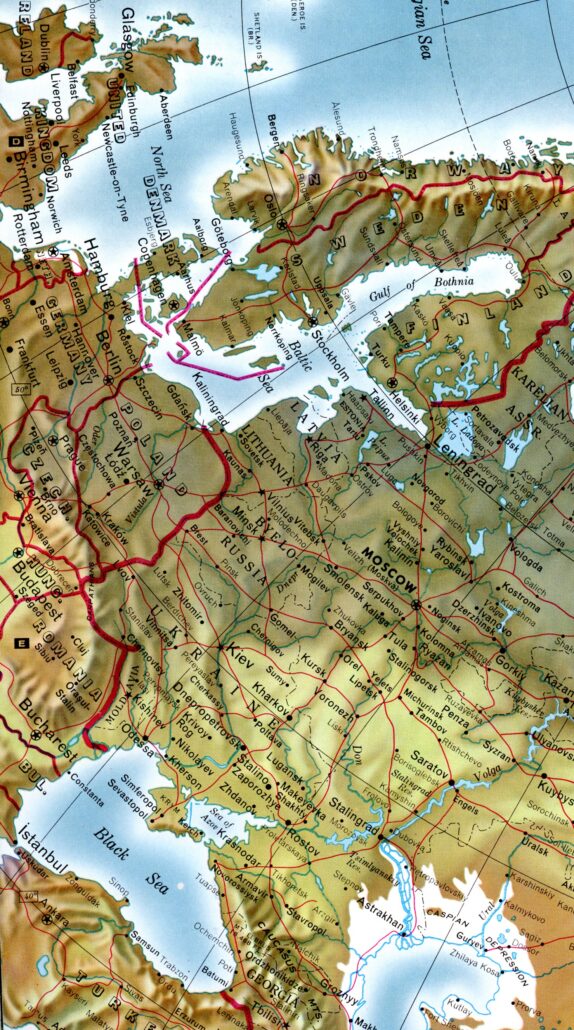
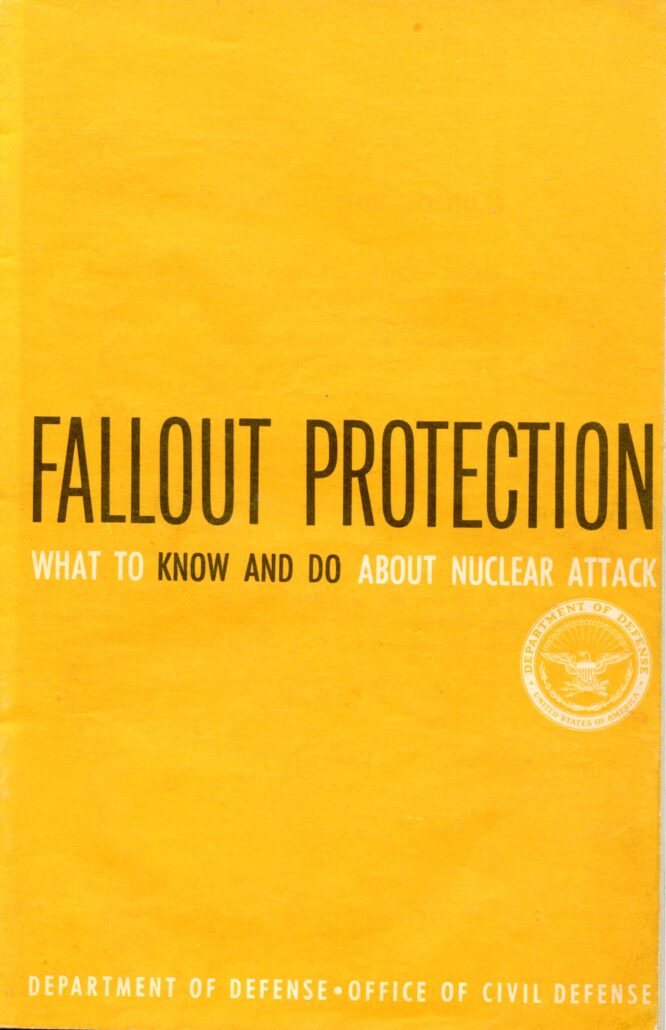
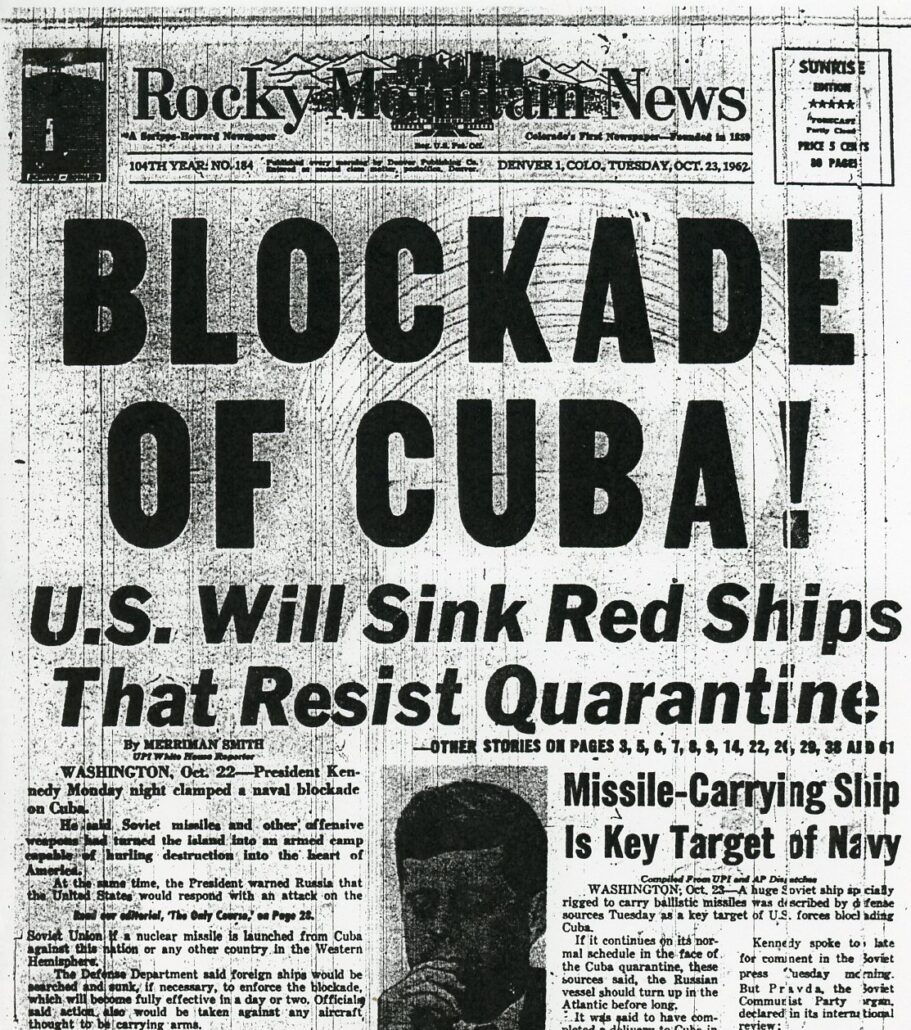
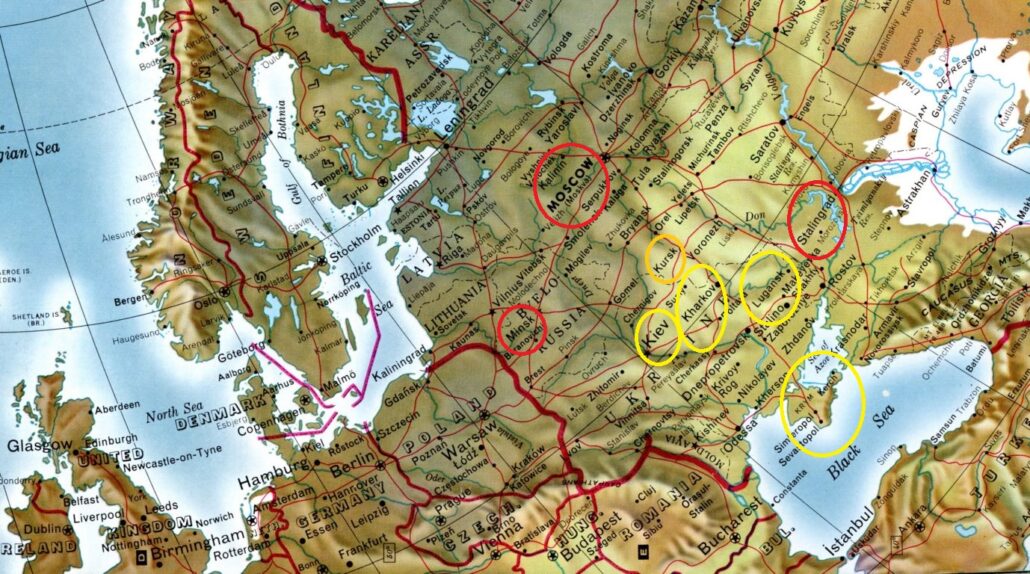
response from Dick: I volunteered for the Draft in December, 1961, and served as an enlisted man until honorably discharged in September 1963.  I was discharged as Specialist 4th class.  I was asked about Officer Candidate School, since I was a college graduate, but I declined as I would have had to extend my term.  The Vietnam era is said to have begun in early 1961, and our unit was being trained for later Vietnam duty – on my time, we had the Cuban Missile Crisis, which was a dangerous time.  I watched President Kennedy with other soldiers on a small tv in a Colorado Army barracks in October 1962.  Other than being prepared, we never went anywhere.  My two brothers are retired Air Force officers, and both had Southeast Asia time in the late 1960s and early 1970s. I was U.S. Army 5th Inf Division (mechanized).  Photos I took are accessible here . This is one of many pages.

North Dakota

A week or so ago I took a short trip to North Dakota, my home state.  I’m no stranger to North Dakota, having spent most of my first 25 years there, and until Covid-19 interrupted, taking nearly annual journeys there for visits.

I’m a North Dakotan, native to the tiny towns that make up the prairie.  Growing up I lived in eight of those towns, taught one year in another, and visited many more in the years during and since.

Two days on the prairie, between Fargo and Bismarck basically, is just a moment.  At the end of this post I’ll include several photos.  The meat of this post became memories of a rural post office, which was stimulated by a photo display at the North Dakota Heritage Center in Bismarck, then a book I saw at the gift shop the same day, July 27.   The book title is “The Prairie Post Office” by K. Amy Phillips et al, published by NDSU Press in 2017.  I have it.  I recommend it.  Here is the portion of the book relating to North Dakota Postal History, by Kevin Carvell: NDakota Postal History 3.  It is very interesting..

The photo display included four of the eight post offices of my youth: Sykeston, Eldridge, Rutland and Karlsruhe, then and now tiny towns.  What follows are some memories of the Sykeston PO from the time period 1946-50 when I was a youngster.  Here’s one of the photos, of the Sykeston Postmaster in 1903:

Sykeston post office and postmaster 1903, photo at North Dakota History Center, Bismarck July 27, 2021.

Here’s the ‘business end’ of a typical rural postoffice, also seen at the ND History Center:  You can see the resemblance to the Sykeston Post office (above).  This is how it was.

The Sykeston Post Office of my memory was in a small but impressive brick building on Sykeston’s single block Main Street.  I think the postmaster when I lived there was Ed Sondag, and the rural letter carrier was Elmer Eaton.  I write from the vantage point of a kid 6-9 years old in the 1940s.

The position of postmaster had stature in every town.  One of my Dad’s cousins, Ernest Collette, served as  postmaster of Grand Forks ND for 20 years.

In those now-olden days, the mail came by railroad, a necessity of life for every place connecting with the rest of the world.

Route map for the branch line serving Sykeston ND 1914.

In those years, the branch line train to Sykeston came twice a day – the morning train brought the mail bags and assorted freight, mostly for the farmers.  The branch line went about 90 miles, from Carrington to Turtle Lake, where it turned around and came back in the afternoon, I suppose five days a week, though it may have gone west one day, and back the next as it stopped at every town, which at that time were roughly seven miles apart.  There was a single non-freight car that carried the mail and any passengers.  I suspect most of the cargo aboard was items purchased from somewhere by local residents, probably from the ubiquitous catalogs; or provisions for the local stores.  Most of the cargo out was grain or other harvest from the farms.

At Sykeston, the post office was a block or so from the Depot.  The mail ritual was always the same: a clump of folks, all men in my memory, would gather and share news while waiting for the mail sort to be completed.

I remember a large push cart with a flat surface, open sided, with two large diameter metal wheels.  It was easily maneuvered by one man – Mr. Spitzer? – who pushed it down to the train, and back.  It was specifically built to transport mail sacks and parcels from train platform to post office.  The load could be balanced so as to be easily moved by a normal person.  No motor!  I tried to find an example on the internet.  The closest might be an old fire hose cart without the hose, like here, with a wider wheel base, and a flatbed.  Perhaps the local blacksmith built it.  I’ll never know.  It was a push cart, not a pull cart.

In the lobby – a small space – the window didn’t open till the postmaster had finished putting the mail in the boxes.  I don’t know if the mail came every day.  My guess is that it did, during the normal week.  My little kid sense was that the mail was an important town event every day.  “Mail call” in the Army, which I experienced directly, is analogous.  There a mail clerk delivered the mail to the troops.

Larger items, like somebodies plow parts, or such, would be picked up as freight at the depot; some possibly delivered by the rural mail carrier.  Rural mail boxes could be very large, designed to hold larger items like from the catalog.  Things like baby chicks would be delivered to the farm door.  This was long before UPS or Fed Ex etc.

July, 2020

The postal delivery man at Oriska ND way back in the day, from Larry, last year.  Special thanks to Carol for reminding me that I used this in mid-August, 2020, in another blog, The Postal Service.

The depot agent was also a very important person in the town.  People like Mr. Neustel, or Mr. Luiten, or endless other depot agents were every towns connection with the rest of the world.  Folks like them could send telegrams.  The local phone operator also comes to mind….

Time changes things of course.  All of us who grew up in these small towns know that they are ever smaller and have often become ghost towns.  Whatever passes for population growth in North Dakota and other rural states is concentrated in the larger cities, which also are the trade centers.  Rural rail, what remains of it, is basically for transportation of grain.  Trucks basically replaced trains years ago.  On and on….

But the exhibit and the book brought back lots of memories.

POSTNOTE August 14:  Here’s how Sykeston remembered the Railroad and Postoffice in its 1983 Centennial History: Sykeston 1983 Railroad Post Office.

Here’s the map of ND railroads in 1914:

Here are some other photos from a whirlwind trip to my home state.

A bit of the North Dakota prairie near Medina ND July 27, 2021

North Dakota’s State Capitol and prairie skyscraper, built in the 1930s to replace the previous capitol which had burned.

The Medina Water Tower. Medina is near the Chase Lake Wildlife Refuge which is best known for Pelicans.

Free Covid-19 shots at the Tower City Rest area on I-94 east of Valley City July 27 2021

Aging base of pillar of the iconic (1907) hi-line railroad bridge, Valley City ND July 27, 2021

Setting sun Red River Valley July 25 2021, reminder of Manitoba wildfires east of Lake Winnipeg.


Winning

Thursday afternoon Suni Lee and colleague olympian and Minnesotan, Grace McCallum, arrived home in the Twin Cities with their Olympic medals in tow.  Their arrival was the front page photo in today’s Minneapolis paper.  They and all of their colleagues in any Summer Olympics activities deserve their accolades.  They are incredibly talented in their chosen activities.  [Postnote: Saturdays front page hi-lited another gold-medalist from Minnesota, Gable Steveson of Apple Valley.]

My friend Lydia sent another example of two other olympians from the Olympics. You can read it here; I is worth your time.  Lydia commented: “I just read this article on Common Dreams, INSPIRING! the TRUE  Olympic spirit LIVES!” They all, and others give definition to the most positive aspects of “winning”.

Hours earlier overnight Wednesday night, Richard Trumka, President of the AFL-CIO died unexpectedly, at 72.

These five might seem an unlikely group, but not to this retired teacher union staff member.  For 27 years my job was helping represent the interests of public school teachers.  Trumka came from a third generation of coal miners; Lee and McCallum and the high-jumpers are young people representing their generation into the future.  Every one of them were parts of a team.

I retired from union staff work 21 years ago.  As former colleagues know, in the last few weeks I’ve been working to reconstruct who we were, ‘back in the day’ before the Minnesota Education Association and Minnesota Federation of Teachers merged, to become Education Minnesota in 1998.

It has been a very interesting process.  I think we got close to 100% in making a list of about 300 former staff people from 1998 and before.  Sad note: about one-seventh of our colleagues have passed on, two within the past week.  (The 300 counts only persons who were paid staff, from member dues.  If I counted members, and their local volunteer leaders, the list would be in hundreds of thousands over the years.  “Union” is a team sport; sometimes messy, but always a team. The 300 is a good representative start.  Most of us were teachers at one time in our careers.)

Unions in recent times have fallen on difficult times.  They have some powerful enemies, but not all.  Today, President Biden eulogized Trumka briefly, and gave credit to unions generally for being among the prime architects of what is called the “middle class”.

My mind fails to compute the enlightened management that considers well paid union workers to be a cost, not a benefit, on the company bottom line.  Without workers money to spend, there would be fewer products to purchase, and lower profits….  Still, when the discussion comes around to value of workers, it usually stops at keeping their earnings down.  It makes no sense.  Trumka and his cohorts are assets, not liabilities.

Which brings me to the photo which leads this column.  Tuesday night I went to an All-Star game out at Aronson Field in Lakeville.  I expected  what the words “all-star” imply – there was  a moving rendition of the Star Spangled banner, and the flag of course, and the teams lined up along the First Base line.

Then the kids and the audience ate KFC, and the All-Star games began.

It turned out, the All-Stars were everyone who showed up to play, all persons with special abilities, including my daughter, Heather, the catcher in the below photo.  Best I can tell, virtually all of the players are Down syndrome, and not kids – Heather is nearing 46.  But that makes no difference; the game is the thing, and all are equal on the field, and there were no losers.  It was a great evening.

Part of the line-up at the All-Star games August 3.  Heather would be in the red, farthest to the left (about the center) in the photo, touching her hat with her hand.  I think they ended up with enough players for two games….  A good time was had by all.

POSTNOTE:  Now, if team USA, the context of we the people of the United States, could get this teamwork thing figured out, what a great place it would be.  Too much we define “winning” as the other one “losing”, and as we keep reducing ourselves to individuals within tribes within former states of a United States of America, the more ludicrous we look.

Elders

“Elders” are now contemporaries of myself, so I’m a bit biased.

Recently, three for whom I have a great amount of respect sent some offerings I recommend.

  1.  Marion Brady invested his life in public education.  I first met him in an on-line chat group of the National Education Association in the mid-1990s.  Here is his website.  No, I’m not asking you to read it all.  But I do have a recommendation to get a sense of who he is.  You can find it in the Personal section.  Scroll through this, and at the very end click on the last link below the picture of the country school in West Virginia which he attended in the late 1930s.  You’ll get a sense of who he is.  Let others know about this website, especially folks in public education.  Marion has long since paid his dues….
  2. Fr. Harry Bury, Catholic Priest, also in his 90s, earned his accolades in his passion for peace and justice.  He, too, has a personal website; note the link “about Harry Bury”.  He wrote recently about his passion, which started a few years ago as Twin Cities Nonviolent, and this year is Sep 18-26 as organized here.  Click on Action Week.  In a July 31 e-mail, Fr. Bury said “Please register. They are our partner.”  There are many ways to participate.
  3. Alan Pavlik is also a senior citizen, whose blog Just Above Sunset is an almost daily stop for me.  As a subscriber, I also receive each week, a specific compilation of other aspects of Alan’s work. Most recently last Sunday came a collection of quotations about Courage.  You’ll be glad you visited.

*

Last night I watched Episode Two of Rise of the Nazis on the local TPT PBS station.  A few hours later came a column sent on by Joyce by Heather Cox Richardson about Hungary’s slide towards authoritarianism (August 2, 2021).

We are fools if we think “It Can’t Happen Here”.  The process is in the open, and continuing, today, in our own country.  We watch it on the daily news, or wherever we choose to get our information.  Of course, the topic is a forbidden one.  A curse on anyone comparing anything with the Nazis.  I disagree.  We have lots to learn from the wrecks of history.

The perpetrators are fools, as was Hitler and his loyalist, as were any pretenders to permanent dominance.

Hitler and the Nazis had a twelve year run towards their 1000 year Reich.  Actually, they had about 10 years maximum, till everything came crashing down.  You know the story.  Throw in others fakers, like Mussolini, Stalin, and many etceteras, and you know the end of the story for all such disasters.

But there are always new fools – leaders and followers – who think their new way will work, and that they are justified.  It always ends, for everyone, in death, with consequences for those who happen to survive the tyrant of whatever stripe.

Hitler’s chief lieutenant was a brilliant guy named Hermann Goering.  Before his death by suicide in a cell at Nuremberg Goering had a chat with psychologist Gustave Gilbert and was quoted as follows.

“Why, of course, the people don’t want war. Why should some poor slob on a farm want to risk his life in a war when the best he can get out of it is to come back to his farm in one piece?

“Naturally, the common people don’t want war, neither in Russia, nor England, nor for that matter, Germany. That is understood, but after all, it is the leaders of the country who determine the policy and it is always a simpler matter to drag the people along, whether it is a democracy, or a fascist dictatorship, or a parliament, or a communist dictatorship.

“Voice or no voice, the people can always be brought to the bidding of the leaders. That is easy. All you have to do is tell them they are being attacked and denounce the peacemakers for lack of patriotism and exposing the country to danger. It works the same in any country.”

(Quoted from the book Nuremberg Diary, p. 278, Gustave Gilbert, Farrar, Straus & Co., 1947. Gilbert was a psychologist assigned to the Nazi prisoners on trial at Nuremberg.)

Never forget: it was the people of one of the bastions of then-civilization, Germany, who by their actions and inaction facilitated the disaster that ultimately befell them.  It happened there, it can happen here.

POSTNOTE August 4: After publishing the above, came the latest news on Andrew Cuomo, New York Governor.  The overnight Just Above Sunset summarizes the national spin: https://justabovesunset.wordpress.com/2021/08/03/the-new-hippies/

I want to comment as an individual, at least to go on record for myself.

I come from a background of valuing Due Process…a way to reach some kind of verdict involving some kind of evidentiary hearing which comes to a conclusion.  Even in the primitive old days that I witnessed, I don’t recall the accused being dragged into the public square, and summarily executed….

What is happening here, is no comparison to Due Process.  The process is charge, conviction, execution.  Likely there will never be any trial, however one describes that word.  The Governor will resign.  There will be outrage, then the next case.

If this was an unusual scenario it would be one thing, but this new means of execution is now very common, as effective and no fairer than the good old-time lynching which continues, justifiably, to raise outrage among fair-minded people.

Due process was no priority in a lynching.

Neither is it here (regardless of potential for such due process down the road).

I want this on the record, even if I am the only one who gives a damn.

Just my opinion.

Angels Unawares

Briefly

If you happen to be around Minneapolis MN on Sunday afternoon, August 1, 3 p.m., join the group at the opening of the Angels Unawares sculpture being displayed during August at the Basilica of St. Mary, downtown Minneapolis.  All of the details can be accessed here. This is an event honoring and respecting immigrants everywhere, and from every era.  We are a nation of immigrants.

August 1:  I was at the opening.  Beautiful day, impressive.  Three photos:  The sculpture will be at Basilica the month of August.  Link in previous paragraph has more details, including Green Card Voices exhibit in the the church, all day through August 26.  Janice Andersen of Basilica wrote a very relevant column in the Sunday newsletter.  You can read it here: Janice Anderson Aug 1 2021

*

And, congratulations to Suni Lee, St. Paul, child of immigrants from Laos, winner of the Gold Medal in the gymnastics competition in the 2021 Tokyo Olympic Games.  Before she won, I had never heard of Suni, though she graduated from high school this year perhaps five miles from where I type; and grew up on the east side of St. Paul.  Like most Minnesotans, I have known of the large Hmong community in Minnesota for the last 45 years.  My elected state representative is Hmong.  The Hmong are a valued part of our community.

Gold nuggets,  like Suni, and Simone Biles, world class gymnast and a true profile in courage for her own actions the last few days, are great examples for all of us.

POSTNOTE August 2: Suni now has three medals.

*

Thanks to Joyce for sending on a thought-provoking article in Rolling Stone about Policing in the United States: “Race and White Supremacy in American Policing”.  This article provides much food for thought.

*

Check back at this space once in awhile.  There will be at least one subsequent post in the next few days.  you can easily request notification of new posts – see end of this post for the check box.

*

UPDATE ON JANUARY 6, THE 2020 ELECTION: Just Above Sunset July 30, 2021 Requesting Simple Lies.

COMMENTS re Rolling Stone  article:

from Dick: myself and one other initiallly received the Rolling Stone link from Joyce.  All three of us had similar observations, and all had family members who were or are part of law enforcement.  It becomes a ‘sticky wicket’ translating generalizations about police down to specific family relationships, as you can imagine.  But the general topic explored in Rolling Stone, pretty specifically about Minneapolis PD, is important and relevant.  Minneapolis, regardless of current progressive reputation, does not have a positive history.  There is a lot of change that is needed.  There is a lot of good, too, that police do.

from Fred: The Rolling Stone piece was damning with the Mpls police, along with others, coming out as the bad guys. Attempts at changing the culture have not worked. Even the tens of millions paid out to victims of brutality have not yet made a difference.

from Carol: When the Minneapolis police come up, I always have to throw in my cousin’s son, who was a police officer there for years (Inc. their horse patrol).  He died in his sleep in his 40s.  And I know he would have been appalled by the George Floyd murder, and all the rest.  He was a sweetheart.

Before his death, he was patrolling my son’s district in So. Minneapolis.  John’s kids called him ‘Officer Scott” and loved him.  John said he attended a neighborhood meeting right after Scott died, where the people didn’t yet know he was gone.  They read a letter there from a woman praising Scott for how he de-escalated a “domestic” situation he’d been called to.

We need way more like that, and clearly no more like Chauvin…

from Joyce: I knew a lot of police when I lived in NYC; I had cousins who were cops, and many of my coworkers there were married to cops. They were extremely racist and homophobic.

*

from Fr. Harry, about Campaign Nonviolence, details here. “Please register. They are our partner.”

The Wall

July 15 I participated in an on-line conversation of a film we had been asked to watch.

The film, The Wall, (2018) is about a homeless encampment in Minneapolis.  It is 87 minutes, free on YouTube, and has been watched over 700,000 times.  The film grabbed me, and held on.  It’s an uncomfortable film, but you’re drawn in to the real people and situations.

There were about a dozen of us in conversation about the film on Zoom on July 15.  The conversation was recorded, and is also available online.

The access point to the film is here.  Watch the film, first.  Set aside the hour and a half, as you’ll want to watch it all.

The on-line conversation with the film producer, Brandon Ferdig, and Noya Woodrich of the city of Minneapolis Department of Health, is available here, the website of Citizens for Global Solutions MN, an organization of which I’ve long been a Board member.

POSTNOTE:  The film and conversation reminded me of a long-ago (1982) powerful talk by Mgsr Jerome Boxleitner of Catholic Charities in the Twin Cities.  He was speaking at the annual meeting of the Board of Directors, and apparently lots of us agreed that his thoughts should be shared.  You can read them here: Mgsr Boxleitner May 1982001.  They are brief, and food for thought.

A 52nd anniversary

July 20 was the 52nd anniversary of the first Man on the Moon.  It was Sunday, July 20, 1969.  I remember the event well.  I wrote about it at this space two years ago.  You can read that here if you wish.  It was a big deal.

Our society likes to remember anniversaries.  A 52nd anniversary is something rather odd.  July 20, 2021, seems to have been an exception: the occasion was the launch of Jeff Bezos, the world’s richest man, and three others, in a few minute joy ride to the very edge of space.  It occupied a small amount of time, but was riveting.  A sort of latter day Kittyhawk flight.

The initial narrative has been, that this was a billionaires plaything.  If you’re the richest person on earth, why not?  The space race was a province of government – something to be very proud of – and now private business is taking it over.

There were a couple of breaks in the clouds between fantasy and the real world.

At the conclusion of today’s program from Texas, Jeff Bezos announced a $100 million dollar award to a man well known to progressives: Van Jones.  And the rhetoric was the kind we like to hear about saving the earth.  We will learn what this means going forward.  Count me among the hopeful.  (He also awarded another $100 million to chef Jose Andres.  This is talked about in the same article linked above.)

The announcement seems to have been something of a surprise, and elicited some discussion on line.

We saw Van Jones some years ago when he was largely unknown.  It was June 8, 2008, in Minneapolis, when Barack Obama was just becoming well known and some months before the 2008 election.

Here’s a picture:

Van Jones Minneapolis, June, 2008.

His was a very stimulating talk.  Fast forward, he was appointed into the Obama presidency, but didn’t last long.  I felt he had and has an excellent message, and he certainly was identified by both Obama and by Bezos as a leader.

Interestingly the day previous to the flight MSNBC’s Ari Melber had a long interview with Neil DeGrasse Tyson, on the general topic of wealthy people and things like the poverty and expensive job rides to near space.  The discussion was thought provoking and is accessible here (about 9 minutes).  Tyson gives some things to think about.

Economically and otherwise, I can’t grasp how I’d use a million dollars or anything close to it.  For Bezos $200 million is more like petty cash than a lot of money.

On the other hand, the gifts were, in my seeing, extremely significant and unexpected gifts to deserving recipients, to be used as Jose Andres and Van Jones decide.  $100 million is a bit better to launch something, that passing the hat for a spare buck here or there!

My guess is that the two men with progressive values will allocate the money wisely and for the greater good.  It will be interesting to watch.


Personal best.

Today the 32nd Olympiad began in Tokyo.

As usual, I did my rounds at the sports center minutes away.  I’ve written about it before.  Usually there are very few of us doing the circuit; sometimes I’m alone.  Sometimes I pass someone else; other times, someone passes me.  I do 11 rounds at a brisk walk; some struggle to do one round; others work up a sweat.

The sports center, Woodbury MN June 18, 2021

This particular week our space was invaded quite frequently.

Yesterday a tyke got a soccer ball into a net – I guesstimated that the ball he was maneuvering was a third his height.  Another day a few aspiring “Charles Atlas” kids were working out outside the orthopedic clinic which is in one corner.  I mused that they’re training to be future patients of an orthopedist.  In mid-field for a couple of days a bunch of enthusiastic middle schoolers were doing some group learning; as I passed by, one of them had been reduced to tears for some unknown reason.

For each of us, this space was our own Olympic Stadium – a place where we strive to maintain or improve some kind of personal best, or teamwork, as the case might be.

Of course, other things swirl around us.  The Olympiad itself was uncertain due to Covid-19.  It looks like the crowds will be whoever watches on TV around the world.  No on-site crowd will doubtless impact on performance.

Outside, this week there’s been a haze attributed to raging fires out west, causing respiratory distress.  A summer drought and unusually hot weather (and terrible floods in parts of Europe) are reminders from Mother Earth to not take things for granted.

Monday at my coffee place I was chatting with the server about the Covid-19 variant now stalking us, and what it might mean longer term.  She appeared to be early 20s at most – perhaps a college student.  “It’s an interesting season of life” she said.  A pithy sound bite.

This era most certainly is, and has been, “an interesting season” for young people especially.  September 11, 2021 will be the 20th birthday of 9-11-01, and everyone 20 years or younger will have lived their entire life thus far between 9-11 and Covid-19 and everything between.

Todays youngsters are not the first generation afflicted by difficult times.  Their future, nonetheless, seems somewhat less assured than for previous generations for all sorts of reasons.

Our “Personal Best”, it seems to me, will be to help protect this resource that is our earth.  This is all we have – no moon shot will save us.

All best to the athletes in Tokyo.  All best to all of us, everywhere.

“Breaking news”

POSTNOTE July 23, 2021: Just Above Sunset on the upcoming January 6 hearing: Ending the nonsense.

*

Published July 21, 2021: Some quick thoughts on the latest piece of breaking news today.  I’d like to see comments.  I may add thought later as well.  Take a look.

Heads up – I will probably do three other posts in the next three days on assorted topics.  I’ll not publicize them to the list, but take a look if you wish.  Thereafter I’ll be out of area and off computer for several days next week.  Have a good one.

A 1905 poster of the U.S. presidents in front of the U.S. Capitol. The last president pictured is Theodore Roosevelt.

Every day, most every day, these days, there is some piece of “breaking news” or other.  My apologies if I use the wrong nomenclature to describe the groups proposed to fact-find January 6, 2021.

Today is no different.  Today’s House Republican leader pulled his five nominees for the bipartisan committee investigating the January 6 insurrection, because the designated evil one vetoed two of the five nominees.

Previously, of course, Senate and House Republicans were against a non-partisan commission to investigate January 6. The House Republicans were against the bipartisan committee even though the proposal had all the components required by the minority leader.  One House member, a very conservative Republican leader, has bucked her caucus on this immediate issue….  All the rest plays out in the media.  I don’t need to embellish.

Today is another occasion for me to brush off a tactical organizing outline which was used against an organization in which I was a leader back in 1974, 48 years ago.  We were then, and remained, the majority group, but 1974 was the first time we faced a challenge.

A person who’d been involved in the opposition back then, gave me his notes on “organizing tactics” in about 1989, and the one page piece of paper pretty succinctly describe what is happening today, big-time, in particularly “conservative” political organizing.

I could simply offer the one-page pdf of the tactics used, but that by itself would deflect from the issue in today’s Congress.

There were 17 points on the sheet, most of which could apply here.  I pick the ones on the page that most jump out at me today.

“Our job is…organizing…we exist to organize.”

“If it won’t get…votes, then don’t do it.”

“Don’t try to solve the problems…Take advantage of and create problems….”

“P.R. everything – disrupt – confuse – challenge – display anger.” (This is what I emphasize, today.)

“Target unpopular [leaders of the opposition]”. (The corollary, of course: do everything possible to make them seem unpopular.)

“Look for corridors to organize.  Expressways connect major towns and cities – you should do the same.”

“Find the angry people, the disenchanted.  They will be zealots for our cause”

“Look for the charismatic leader, preferably male, white….”

“Blame [the other side] for every current and historical problem.”

“Talk to as many…one-on-one, as possible.  These individual “hits” are crucial.”

“State the problem, blame the [other] and promise the opposite.  Offer nirvana.”

“Publish everything – spread lots of paper around.” (Of course, this was years before today’s technology.  It was harder and more dangerous to lie back then.  Pieces of paper were evidence.)

“Try to get the [opponent] to react to defend themselves.”

“Always stay on the offense – never defend a charge or challenge…Always move quickly from issue to issue.”

“Brag about other [places] where we are the representative.  Do it with mirrors.”

“Challenge to an election at every opportunity.  Keep the situation disrupted and the [people] split.”

“Spread the battle cry, “Give us a chance, just give us one chance”.

In 1974, we were blitzed with all of these tactics and, frankly, we were clueless.  In a moment of desperation, one member – it may even have been me – suggested that we go on the offensive, rather than staying on defense, as we had been.  It was an inadvertent act of genius!

We were ripe for being defeated that year for reasons that had nothing to do with what we did.  If you reread those tactics, they are exactly the same as relied on now by the T-party.  Most everybody wants something for nothing; but something for nothing is utterly without value, as ultimately we all have experienced in our own lives.

In 1974, the election was held, and my recollection is that we won with 60% of the vote.  It was a large unit with many work sites – probably well over 1200 members.

I didn’t learn about the specific tactics (above) till 15 years after the election.  Read them again and internalize them.  They are and should be weapons against the people who now rely on them, again….  Back then, the tactic worked…for awhile.  Then it didn’t….  Keep that in mind.  You can make a difference.

Expect to see the picture which leads this post quite often.  It will probably be connected with a blog about the January 6 hearings, or similar.

My opinion about what Nancy Pelosi did?  I surely understand what she did.  In personal experiences in my work life, I had no problem with differences of opinion…I really had no choice.  But today is a different day especially from media standpoint.  People can choose, and do choose, where to get the messages that validate their point of view.  Only Nancy knows why she made the decision.  The Republicans decided to exclude themselves and so be it.

COMMENT:

from Peter July 21:  Not a long comment, but just this: as a student of Japanese strategy
for, gosh over thirty years now, I know that strategy and the sword are one.

This came home to me again when our next headmaster gave a talk on a
coaching website about our late Sensei’s book, “The Way and The Power.”
He described a negotiation in which, each time the opposition raised an
idea, they were attacked personally, ad hominem. Again, and again, and
again. No counter-argument, just dismissive and disdainful insults.

He was making the point about strategy, which is a word found on most
business cards and web landing-pages in Washington, DC, these days. That
audience is prone to mystical beliefs about strategy, that it is a Force
for Good, or at least confers some kind of mojo.

That was when I realized (not for the first time) that this is exactly
what the sword is all about: regardless of whoever has a grip on the
handle, the blade will cut whatever it touches.

Context is decisive. When winning is all, we tend to bend ourselves out
of human shape, and assume the shape of whatever it is we think we’re
struggling against.

Just dedicating our lives to winning may, as somebody recently wrote,
get us a bed in a fantastic nursing home.