
Ken Burns: American Revolution
FRIDAY, NOVEMBER 21, 2025 10;10 PM. I watched the entire 12 hours of Ken Burns American Revolution on PBS. This consisted of six 2-hour programs, If you missed this phenomenal series, or any part, here are details from PBS and/or check with your local public broadcasting outlet for other arrangements for future viewing. Every American should take the time to view, discuss, and reflect on the meaning of this extraordinary program on the creation story of the United States of America.

George Washington, born 1732; 43 in 1775
If you were born and went to school in the United States, you learned a shorthand version of our native land. Of course, it was not the whole story. The shorthand version was much like the old farm postcard from before 1910. Of course, we young scholars remembered fragments of that already much condensed version.
As I watched the twelve hour summary of our history over 6 evenings, Nov. 16-21, I mined my memory for the scraps I recall about my country. Here is my condensed version.
George Washington cut down the cherry tree and could not tell a lie; and threw a coin across a river. (Some myths, here).
The Boston Tea Party; Paul Revere’s ride; Benedict Arnold betraying his country; the First Thanksgiving; Valley Forge; the King of England; people that looked a lot like me did all the work to establish the United States of America. Ours was “the land of the free and the home of the brave” – “America, the Beautiful”….
Of course, life goes on, and as time went on there were more snippets, each adding to my own knowledge: Several trips to our nation’s capitol, visits to the White House and the U.S. Capitol, the sites of Boston, Lexington and Concord, Colonial Williamsburg, Philadelphia, on and on. Each visit expanded my knowledge a bit.
Slaves, Native Americans, Quebec (supposed to be one of the original states. My Dad is 100% French-Canadian, which makes me half French-Canadian), the role of France….
These and many, many other fragments of information were like fashioning a puzzle out of many pieces.
The pieces are not all glorious, for certain: the Civil War; the refusal of the new United States to recognize the slave revolt which led to an independent Haiti in 1803, right after our Constitution was ratified.
Endless pieces.
What Ken Burns and crew endeavored to do, and did it masterfully in the series, was to make a portrait of America more consistent with the actual history as it really happened, with the glorious and the shameful; the personal virtues and the failing of human beings in what was a very long and difficult struggle. (The Tea Party was not immediately followed by a festive Thanksgiving Dinner thrown by grateful natives.)

Old North Church Boston, June 1972 (Dick Bernard). (“one if by land, two if by sea”)
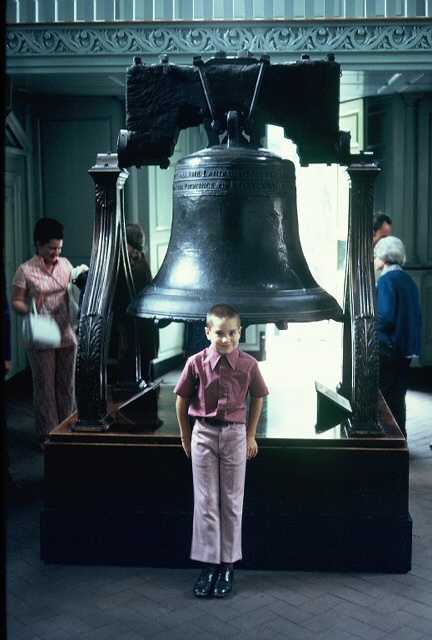
Tom Bernard at Liberty Bell, Philadelphia June 1972
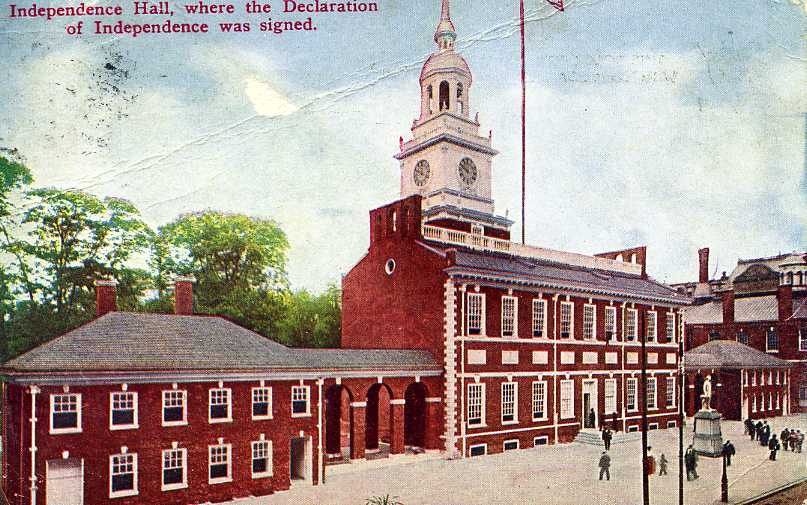
independence Hall (Pennsylvania State House) Philadelphia old postcard from Busch farm from early 1900s.
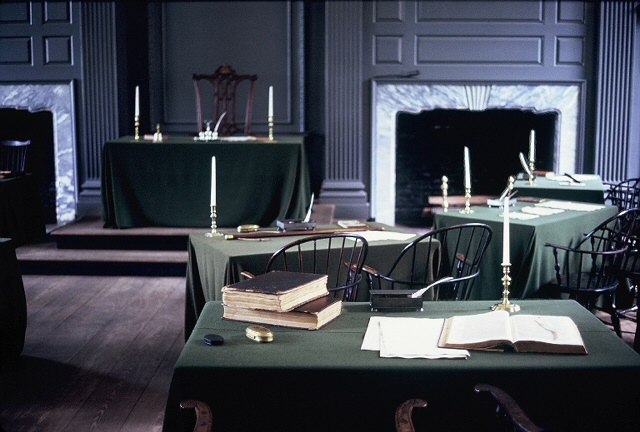
Constitution Hall, Philadelphia PA 1972
Give yourself and your family gift: Make it a point to not only watch the entire 12 hours, but to talk about what the revolution means in context with today.
POSTNOTE Nov. 23: This post from Heather Cox Richardson dated Nov. 22, seems pertinent to this conversation.:
COMMENTS (more below):
from Chuck: Thanks Dick. I suggest passing this prayer around your thanksgiving dinner…each person read one part: Iroquois Thanksgiving. [here is a verbal explanation by an elder]
from Michael: Hi Dick. This is the best article ever written about the US Peace Prize. NOTE: Michael is founder and director of the U.S. Peace Memorial Foundation. I am a supporter of this foundation, and a friend of Michael.
from Claude: Dick, this might also be relevant to this point in history. NOTE: Claude is a good friend and long time advocate for international cooperation.
from Larry: Am currently watching, Dick – DVR’d all the episodes, taking ’em one by one. Excellent Ken Burns film! Again! LG
from Norman: We did as well and I agree that it was outstanding!
from Jeff: watched the first 8 hours…yes, good, MAGA would not like it.
from Ruth: My superficial impression based on the visuals is that George Washington was a great general. He had the advantages of knowing the landscape and geography. British generals and officers were possibly more experienced in terms of training and tactics, but probably did not understand distances and geography in North America. The Revolution might not have succeeded if French and Spanish had not got involved to defeat their British enemies. European conflict was transferred to North America. I missed the part about Benedict Arnold invading Canada and Quebec. Have read about that. I will have to see that part again. Fell asleep a few times and missed the good bits. I liked his criticism of American Indigenous and Black slaves who tended to think they were better off with the British than the Americans. They lost their lands and human rights along the way. He was honest about that.
from Robin: Totally agree this is a stunning and eye opening series. A new perspective on the creation of our republic.
from Bob: My biggest take-away was how our nation has destroyed our indigenous folks and the black Americans.
And the current administration is just making that worse.I think we should get all of Congress, the Executive branch, and the Supreme Court and lock them in a room to watch the entire series.
from Jeff: After watching the 5th installment this old American historian (M.A. Oregon 1978) comes to some conclusions I have gleaned over the years, and some that reflect perhaps the more negative “woke” view of some of US history.
from Ruth: What I don’t like about Washington is that he married a wealthy woman and used her money to buy Black slaves and Indian land. I have read quite a bit about Thomas Jefferson and his Black slave concubine or whatever the right word is. She was his wife’s Black sister. Wife’s father was a slave owner and had Black children with a Black slave woman. This just about turns my stomach what those women went through. It is so hard to reconcile a hero like Jefferson with him keeping a Black slave, his wife’s “sister”, who looked like Martha Washington, but she was a “little bit Black”. Yuch! What was he thinking. She was his prisoner! Suffered from his daughter who was jealous and would not acknowledge that Jefferson let this Black woman, his wife’s sister, to run his household. Bad for the family after he died! Not a hero to me! I think he had abouut 7 children with her and did not free them. But he turned a blind eye when they escaped and “passed” as white. Why did he take her back to Virginia and slavery? He loved Monticello more than her. He put her and her children back into slavery. yuch!
from Dick, some scraps in reflection: I am a casual historian and geographer, with a college major in geography. Throughout life, I’ve picked up “scraps” whenever and wherever I can – roadside historic site signs are like a magnet. Like with a rag quilt, random pieces can make a coherent whole! That’s the beauty of Ken Burns work. Taking many difficult years at the time of formation and making them into 12 hours of civic engagement 250 years later is a real chore. And he did it.
My ‘research’ after the film has been minor. I think the colonies had about 2 1/2 million people east of the Appalachians at the time of the Declaration of Independence. England had about 8 million population and already a worldwide empire. (The twin cities where I live are over 3 1/2 million; Minnesota nearing 6 million).
George Washington lost more than he won, but he was a gifted leader; when the chips were down, which were often, enough volunteers showed up to advance the cause.
The novice leaders modeled their new system on the English, because they were mostly English. They understood the system. Most, but not all, did not want to have a king. To study them one has to be very aware of the circumstances of their time. The results speak for themselves. So far we’ve been fortunate to last for 250 years, warts and all. That history is in serious jeopardy now, and “we the people” have to be the volunteers to save our past and assure our future, just like those volunteers did during revolutionary times. Somehow they all had the stamina to last it out.
Finally, I’m very aware of the Canadian/French/English component of this particularly since my Dad was 100% French-Canadian, and I have spent more than 40 years delving into family roots and stories. My LAST French-Canadian ancestor arrived in Quebec only two or three years before the English defeated the French at the Plains of Abraham in 1759. This was 16 years before Lexington and Concord and the like. At the time, the area that is now Minnesota was by and large considered part of French Canada. In 1818, the U.S. – Canada borders were set.
The treatment of the natives and the slaves were inexcusable – the nature of war, I suppose, and the attitudes prevailing then. We cannot undo the past; the worst we can do is to try to continue the sins of the past. The best, working to make things better for the future, rather than revert to old, failing ways. It’s up to us.
from Jim: Well, I wish I could be as confident about America’s future as other commentators are. First off, we are constantly told a rather one-sided, pleasant history of America. The history of the real America takes some digging or luck in what you read. For example, did you know that Charles Lindbergh, yes our Lindbergh, twice led a coalition to Nazi Germany to ask how that government could be replicated, at least in part, in America? Lindbergh was an ardent supporter of eugenics, a seudo-science theory that white people were genetically superior to all other races. Though eugenics may have started in Enland, American philosophers were it’s strongest supporters. Hitler’s government adopted eugenics as justification as you might expect. Lindbergh and followers also demanded that Roosevelt surrender on Germany’s terms when Hitler’s Germany declared war on America. Fortunately, Roosevelt ignored that advice.
But these are just a couple of examples, there are many others (like holding on to slavery for forty years after all of western Europe ended it). To really understand America, we must balance the good, which we hear about constantly, with the not-so-good. It’s that balance that might lead to a better America.
Ken Burn’s masterpiece! I only wish I saw this in grade school, and not the generic whitewashing of the conflict. Even in my college US history course so much was left out of a critical and important time in our country’s history. Not to mention slave holdings, the robbing of Indian land and betrayal of both races by the highest powers in the colonies. The cinematography, narration and writing is brilliant. I highly recommend everyone to watch this, and it really should be required viewing in our schools.
The series was remarkable. The only thing missing was the role the Canadiens played in the American Revolution. Their contribution was far from marginal. For example, see the Encyclopedia.com entry on the Second Canadian Regiment: recruited initially in Quebec and later among Canadien refugees in Albany and Fishkill, it was organized on a French-style four-battalion structure, with five companies per battalion and fought at Staten Island, Brandywine, Germantown, and Yorktown, earning a reputation for exceptional discipline and combat performance.
Further documentation can be found in
• Karl Wittke,
• Canadian Refugees in the American Revolution (ElectricCanadian.com),
• Allan S. Everest’s Moses Hazen and the Canadian Refugees in the American Revolution (Syracuse University Press, 1976), and
• Raoul Roy’s Les Canadiens-français et les indépendantistes américains, 1774–1783.
Way back, at this space May 23, 2009, Mary Ellen Weller posted on your very topic. Take a look here https://thoughtstowardsabetterworld.org/french-canadians-in-civil-war/
Remi, a cousin who lives in Montreal and is well versed in Canadian history, replied to my comment as follows: I think I’ve read that before. I did know that several thousand Canadiens served in the Union Army, and many were killed in the war. One of the officers was Calixa Lavallée, who later wrote our national anthem, O Canada (in French). Meanwhile, much of the English bourgeoisie in Montréal supported the Confederacy — the secret Confederate headquarters was based there. John Wilkes Booth, Lincoln’s assassin, visited Montréal for guidance just before the assassination.
During the American Revolution, in 1776, commissioners sent to assess political sentiment in Québec reported that support for the Americans was widespread on the South Shore of Québec City. In at least half of the parishes, they wrote, the inhabitants leaned strongly toward the rebels. Beaumont—where the Roys lived—was singled out:
“Except five or six good subjects, this parish was very fond of the spirit of rebellion and has always been zealous for the rebel cause.”
I once sent you a map that also marked St. Vallier, 12 miles from Beaumont, where François Collet was living at the time, as a “bad parish” — meaning heavily pro-American.
Roughly half of all Canadiens who served in the Continental Army came from this same South Shore region. Many were recruited by Major Clément Gosselin, a close relative of Geneviève Gosselin, Denis Collet III’s great-grandmother.
The French Canadians and Lafayette
The Canadian Regiment played a meaningful role in the Siege of Yorktown. On September 24, 1781, Colonel Moses Hazen was given command of the Second Brigade in the Marquis de Lafayette’s Light Division — placing his Canadien soldiers directly under Lafayette’s command. They took part in key siege operations that helped force the British surrender, the victory that effectively ended the American Revolution. At that time, before the French Revolution, the French spoken in Canada remained very close to the language in France.
During the American Revolution, French soldiers primarily spoke regional dialects, with only about 10-12% fluent in standard French. The army used standard French, with non-commissioned officers serving as translators. At the Siege of Yorktown in 1781, French troops outnumbered Americans. In contrast, all the Canadien soldiers spoke a highly standardized colonial French, closer to Parisian French than the various patois common in rural France at the time.
One of the things that struck me while watching the Burns’ series is how “civilized” it all was – at lease in comparison to the wars fought throughout the globe in my own lifetime of 70 years. Wars, today, are certainly different in many aspects of how they “feel” to participants, both the willing and the “just caught up in it.” Much about the two World Wars was also not similarly “civilized”. The American Civil War, which is often pointed to as a watershed turning point, worldwide, in the methods of waging war, was something in between. And my sense of ancient warfare is that it could be quite barbaric in comparison to any of these. Which begs questions about how this “arc” – from barbaric to “civilized” and back to (or at least toward) barbaric has happened. (…been allowed to happen? …been made to happen?)
Separately, I was also taken by the observation – included even in the title of one of the episodes – that to “conquer”, Washington needed only to “draw”. I wonder how much this nugget of military history was in consciousness for our military and political leaders during the conflict in Vietnam, which pretty clearly was one in which both sides “played for a draw” over an even longer number of years, and for both of whom, I think, what “a draw” looked like was quite different in fundamental ways. (Having a nephew who flies fighter jets for the USAF, and conversing with him over the years, has been illuminating for me. What US military officers are taught about warfare, both formally, and informally in conversations with “the old guys who are still around”, is very different from what we civilians learn in school, on TV, etc.) Assuming “winning via draw” was “in mind” during Vietnam, I wonder, too, how much differently this played in the minds of American civilian leadership vs. American career military officers. After all, many of the latter had participated, as young rising-career officers in WWII, which was at no time, by any party, “played for a draw”. And, of course, many of the future civilian leaders (JFK, for instance) had also participated, but as individuals who knew the military would likely not be their career.
These are not even the ONLY two things the series set my mind to wondering about, so I’d say it was a pretty good use of 12 hours…!