
Kindness, and Amable Guion
Today is Memorial Day. My family, like many ordinary families, has a long history of service to the nation, and I remember everyone who is or has served our nation, not only in the military.
Today I recognize this Memorial Day in two ways, both somewhat ‘spur of the moment’, and perhaps a bit different than what is usually seen as normal.
Today’s (May 24) Heather Cox Richardson has an announcement of particular historical interest
*
The first recognition: I title this post “Kindness” thanks to about five minutes on a recent CBS Evening News segment about a visit to an elementary classroom about 40 miles down the Mississippi River from where I type, in Red Wing MN. Hopefully the segment is still on line. Here is the link. Again, take the five minutes…. It will speak for itself.
*
The second recognition relates to a person I’d never heard of til recently, who happens to be a distant part of my family tree. He is Amable Guion. He “died in combat on May 26, 1780, during the Battle of Fort San Carlos (a British and Native American attack on St. Louis)”. This is a family history deal, about an event in America’s revolutionary period, and if you’re interested in family history, particularly French-Canadian, you’ll likely be interested in this.
First, the summary.
In the summer of 1980 I first became interested in the history of my Dad’s French-Canadian, and my mother’s German-American families. I’m still at it 46 years later, and its a fascinating journey. The big files are here. This relates to the French-Canadian ‘side’, and relates to the ‘war’, largely between the native peoples, and the Spanish, French and English interests in North America.
For the U.S., 250 years ago, 1776, was the Declaration of Independence. Thirteen years earlier, in 1763, the French and Indian War was settled by the Treaty of Paris, which essentially carved up the to-be United States into two huge pieces, one England, the other Spain. Of course there were natives too, but not in the real estate business. (Most of my story is in the links following the text.)
How Amable Guion fits into the story.
About 35 years ago my Dad and I were visiting the Gateway Arch area in St. Louis, and I came across a new book, “St. Louis: A Concise History” by William Barnaby Faherty, S.J. At the beginning of the book, on page 5, was a sentence that drew me in: in February 1764 “Mrs. Margaret Blondeau Guion, presumably the first woman to come to St. Louis, crossed the river from Cahokia in late May to join her husband Amable who had signed up with Laclede”,
This intrigued me greatly, as an ancestor of mine who came to what is now the Minneapolis area in 1854, was Simon Blondeau, my great-great grandfather, who purchased land on the Mississippi River at Dayton MN. My cousin, Remi Roy, documented that Marguerite Blondeau Guion and Simon Blondeau were from the same Blondeau line, two or three generations removed from each other.
So, a relative was around at the very beginning of St. Louis MO. Neat. I shared this at my grandsons wedding in March of this year.
I knew nothing at all about about Amable Guion . In the last month or so, looking at another e-mail from cousin Remi, I noticed the name “Guyon” among my Collette family ancestors in Quebec. More correspondence with Remi, and indeed Amable Guion was in another of my ancestral lines. His bio is also linked below.
Finally comes the connection with War.
In the 1763 Treaty of Paris, England essentially got what is now the United States east of the Mississippi, including French outposts among which was Fort de Chartres, on the Illinois side of the Mississippi a few miles north of present day Ste Genevieve MO. Spain got the area west of the Mississippi, France was no longer a player, having been defeated by England at Quebec in 1759. So, in 1763 the French-Canadians were in English lands, and in 1764 Amable and Marguerite and others moved across into Spanish territory, which was to become present day St. Louis.
The few French who came across the river in 1764 apparently lived freely until 1780, when Amable was killed, as described in the below link. Marguerite remarried five months later, and lived on until her 90s, becoming known as one of St. Louis’ original settlers.
(In 1802, Napoleon purchased from Spain what a short while later became the Louisiana purchase. (see the link “Louisiana” below.). In 1804 the slaves in Haiti declared their independence from France. Napoleon unloaded Louisiana to the U.S. (the “Louisiana Purchase”) not long after he acquired it, and not long after came the Lewis and Clark Expedition and the rest is history.)
If you wish, take a quick trip through the links, and you may find something of interest, as I did.
Guion Amable history
Marguerite Blondeau history
Historical U.S. Map 1750 1763 – National Geographic map 1988 adapted by Dick
Historical US NatGeo1988001 – National Geographic maps 1775-1890
Louisiana – Council on Foreign Relations April 30, 2026
Blondeau as part of my personal family tree (pages 34-47 and 72-81)
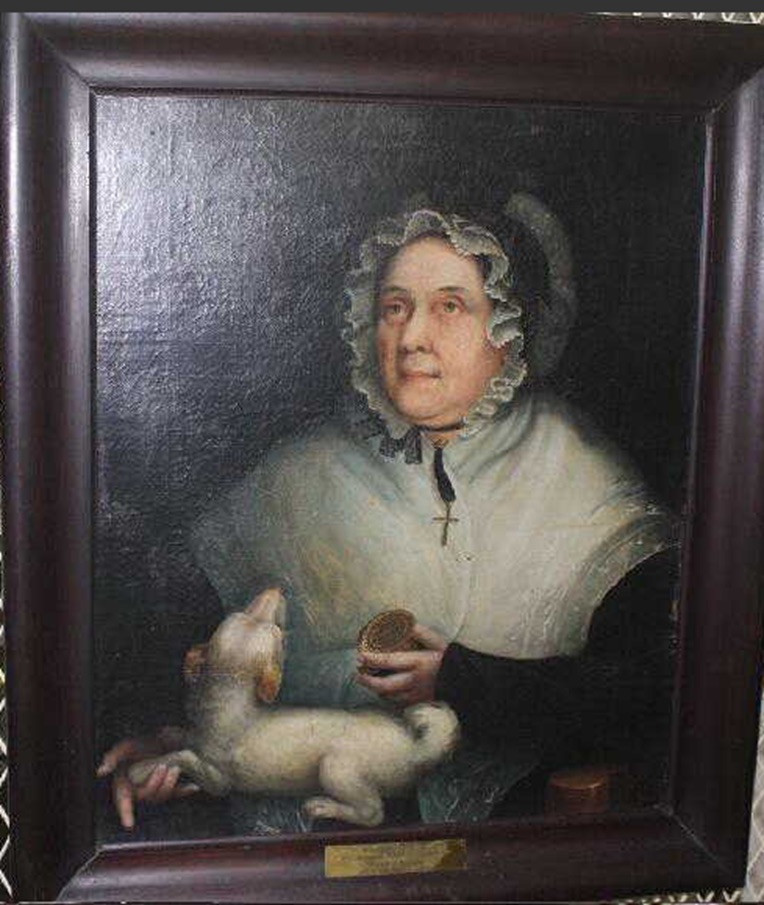
Marguerite Blondeau Guion (about 1820 in St. Louis MO) In the Smithsonian Collection.
COMMENTS:
from Dick: Personally, I attended the local Memorial Day at Woodbury City Hall Veteran Memorial. It was well done, like all such observances, recognizing service. It was well attended. Here’s two snapshots:
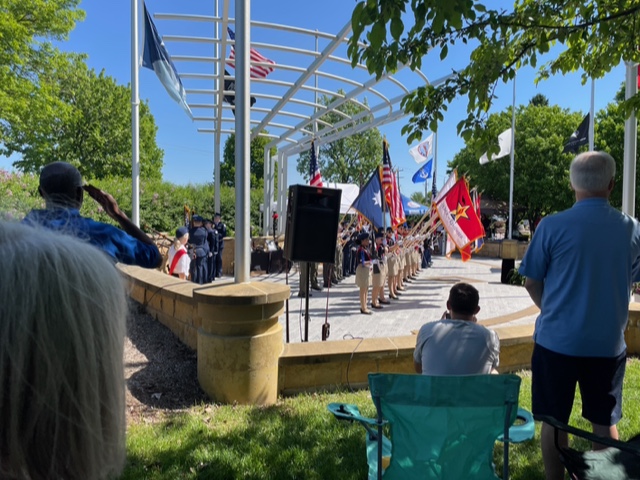
Memorial Day Woodbury May 25, 2026

from Dave: Thanks for the “thoughts” today Dick. Your family has an amazing history. I was able to find you through a French website. Hope all is semi-well. My oldest daughter just visited Hawaii and spent several days at Pearl with her husband. They know the story of Max and Petey. What Kash Patel did was sacrilege. I’m trying kindness, but it’s not easy these days.
from Fred: Always a fan of early American history, particularly in the ‘west’ and ‘northwest’ and even when those regions were really not a part of America. Thankfully Manifest Destiny prevailed and the US has the contiguous 48 states, Hawaii, Alaska, Pacific holding, Caribbean presence, Greenland and Canada!
response from Dick: I just did an update on earlier post on Cuba. This one includes recollections of three folks who actually were visitors to Cuba a few years ago.
from Jeff: Interesting family history in the Cahokia/St Louis area for sure.
from Remi: Yes, Gayan is absolutely a recognized phonetic variant of the surname Guyon, like Guion and Dion.
Jeff’s point about Michigan and Maine having high percentages of French Canadian descendants is spot on. I actually pulled up some census data on this, and Maine and Michigan are right at the top of the list:
- Maine (~24% – 25%): Holds the highest concentration, especially in northern border towns like Madawaska and historic mill cities like Lewiston.
- The French-Speaking Pockets: In some northern Maine communities, the vast majority of residents still speak French at home.
- New Hampshire (~23% – 24%) & Vermont (~21% – 23%): Also have high percentages.
- The Midwest Connection: States like Michigan (especially the Upper Peninsula and Detroit metro area), Wisconsin, and Minnesota have substantial populations of French Canadian descent.
- I think I already told you this. I have many more relatives in Minnesota than in Manitoba. My grandmother’s mother had 117 cousins on the Gervais side and a good many on the Samson side. She was the only one who moved to Canada. My grandmother was born in Minnesota. Six generations of her family lived in the United States, yet she spoke almost no English until she was married. Part of her family left Quebec in 1808. 190 years later, she still preferred to speak to me in French.
from Jeff (2): quite interesting….what a tangled mess the Revolutionary War was in some ways….British and Natives (including 200 Dakota Sioux from Minnesota, and Ojibwe from Michigan both tribes of course bitter enemies! ) fighting Frenchies, Americans and Spaniards in St Louis……your ancestor was amongst the 70 to 100 casualities on the St Louis side, the Brits and their native allies lost only 4 fighters! Here’s article about the battle. [from Dick] The link is brief, yet quite an informative look at the revolutionary days situation in what is sometimes called the corridor of the Mississippi and Missouri River Valleys. The mid-continent and west (see Lois’ comment below) doesn’t get nearly the attention as the east in revolutionary war days. History is much more than a soundbite or photo.
POSTNOTE
Napoleon Bonaparte.
I am not an academic, but often, for me, ‘curiosity kills the cat’, and one factoid leads to another and another…. So it went with the lives of Marguerite Blondeau and Amable Guion, both in my French-Canadian ancestral soup, both who appeared unexpectedly on my horizon.
Then came Napoleon, who we’ve all heard of, but in my case only bits and pieces over the years.
Most recently, Napoleon surfaced in the Arc de Triomphe, which I featured in a recent post (photo below) and which is obviously the model for the proposed (and terribly ill-advised) Arch in Washington DC.
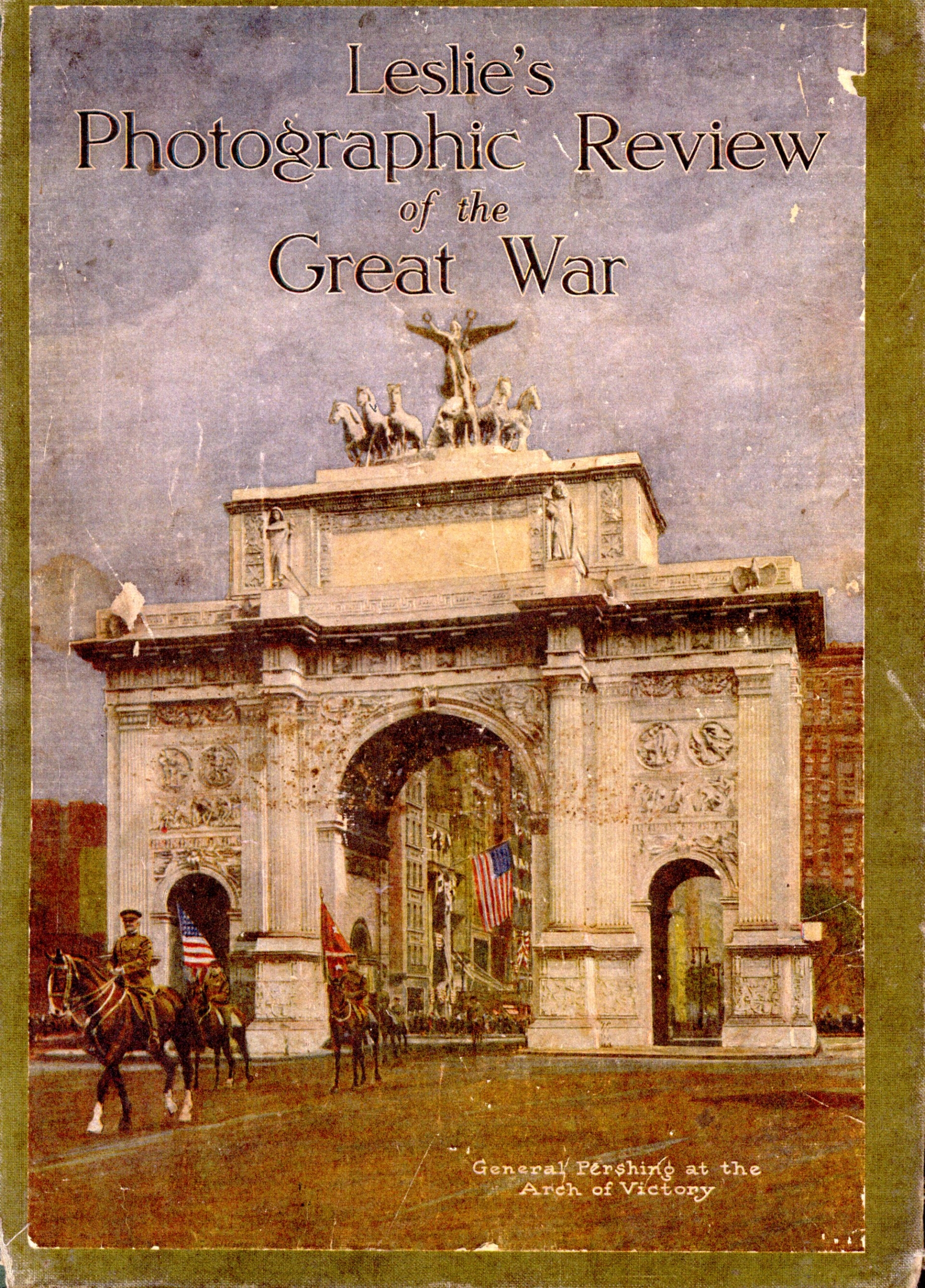
Cover of 1920 pictorial history of WWI, Leslie-Judge New York 1920 edition.
I looked up the Paris Arch, and it was commissioned in 1804 by Napoleon about the time he had proclaimed himself emperor of France. By the time it was finished, Napoleon was long gone from the scene.
Napoleon most definitely had street creds as a war-maker. At home I have an 1899 book, “Famous and Decisive Battles of the World” by Brig General Charles King writing about 52 decisive battles (his assessment) of the world over 2500 years. Keep in mind that this was an 1899 perspective
Five of these battles were Napoleon’s, four won by Napoleon in 1800 (Marengo), Austerlitz (1805), Jena and Auerstadt (1806), the fifth lost at Waterloo (1815). (In the same list were Bunker Hill (1775) and Saratoga in (1777), and some others in the fledgling US before 1900: The Alamo (1835), Chapultepec (1847) (See Lois Young comment below and Chapultepec), Malvern Hill (1862), Manassas (1862), Chancelloersville (1862), Gettysburg (1863), Nashville (1864), Five Forks and Lee’s Surrender (1865). And the last of the 52, Santiago Cuba (1898). Note: Lois also sent on the funeral oration at the time of her relative, Ira Tunison’s, death
Arguments might abound over which should be removed from King’s list, or which, added. That is not my task. I comment on them here because nearly 10% of the significant battles, according to the author, an American, were Napoleon Bonapartes.
Without going into detail, what struck me with my little project about Amable Guion, was the role of Napoleon and France in early U.S. history…his purchase of an immense part of the Spanish territory in the early 1800s, then his sale of the same territory to the new United States in the Louisiana Purchase of 1803. Best I can tell, this was not a gratuitous gift to the U.S. Not in the least. In 1804, slaves in Haiti revolted and won, thowing out their French overseers, and France lost is most valuable new world possession. This doubtless played into Napoleon’s decision to sell; the cost to protect his N. American real estate exceeded the expected benefits. The rest is history, including the Lewis and Clark expedition to explore the former French and Spanish territory of the west. So life goes.
The above words are just scraps of history. Feel free to fill in the picture for yourself.
That was a nice Memorial Day concert from the Capitol mall last night on PBS.I was so glad that that five-time draft dodging convicted felon did not try to make himself a part of the special event. Given how insecure, narcissistic and arrogant as is that man-child, It is a wonder that he did not try to crash that so very special event. Such a needy child!
Memorial Day brings thoughts of uncles. My mom’s two brothers were in WW-2, fortunately were not killed. Uncle Leo was hit by shrapnel, and the horrors were evident by his talk and behavior. Two great uncles, Ira and Alexander, fought in the war in Mexico in1847 – Ira was killed, Alex died from wounds in Chapultepec. battle. Researching ancestors also revealed others in direct blood line in war of 1812, Revolutionary War. Memorial Day isn’t just for those who wore a uniform…but for all who supported the causes no matter their country of origin of their ancestors. Thank you, Dick, for all the interesting links and stories. The maps of our country were wonderful to see and future articles from Heather Cox Richardson will be interesting!
DIck,
Thanks for the family history stuff – even if it’s not my family! I thought I’d comment, for the benefit of anyone who is interested in learning more about their own family history, about the “Guion/Guyon” aspect of your story today.
My mom’s maiden name was Turk. In researching out family, my little sister discovered that we are related to folks named Turek, Duerck, Duerk, Dierck and several other permutations. And don’t even get me started on “umlaut over the u” vs. “e after the u” vs. “just the u”. A friend of mine from work, decades ago, confirmed that though she is a Turek (by marriage), the majority of her AMERICAN in-law relatives are Turks and Duercks. In my family’s case, it’s related to BOTH “Old World” inconsistencies in spelling (especially among less-educated farmer folk) AND the notorious scribes of Ellis Island. My sister found related but different names in ancestors and their decendents on both sides of the Atlantic (my Mom’s Dad came to the U.S. only the the early 1910’s – so we’re newcomers compared to your folks…! His personal conversion to a “Turk” was an Ellis Island thing…)
So, for anyone doing geneology or other forms of family story-recovery, know that you have to account for alternate spellings and mis-spellings, whether casual, intentional or accidental! My sister found that often what connected one part of Grandpa’s family to another was not some document that indicated a spelling change directly, but some collection of documents, with a little “detective reasoning” applied to them.
Lewis and Clark’s “Corps of Discovery” arrived at the Pacific as latecomers to a world that French speakers had already traversed and named.
Throughout the expedition, French influence appeared in many forms. French-speaking Canadiens and Métis made up over a quarter of the 43 members. These men, mainly hired in St. Louis, were sought for skills unavailable elsewhere. Lewis and Clark also relied heavily on maps predominantly signed by French Canadians.
Lewis and Clark filled their journals and maps with French topographical terms. Relying solely on the expedition’s maps could lead one to conclude that the French solely inhabited the lands the American expedition visited. When Lewis and Clark reached the Pacific Ocean, they found existing French-speaking settlements. (see Foxcurran et al, Songs Upon the Rivers).